

Sentiment Score
Sentiment score = mean(sentiment per mention), where each mention is scored -100 to 100 by our model (0 = neutral, 100 = positive, -100 = negative)
How it's calculated
We use our own model to sense how positively or negatively AI talks about your brand in each mention. We then average those scores across all mentions to produce your sentiment score. The scale runs from -100 (negative) to 100 (positive), with 0 as neutral. Higher is better.
How it works
When AI cites or mentions your brand, we analyze the context:
- Positive: Favorable comparisons, recommendations, praise
- Neutral: Factual mentions, lists, comparisons
- Negative: Criticism, unfavorable comparisons, warnings
The sentiment score aggregates this into a -100 to 100 scale (0 = neutral, higher is better).
Why it matters
AI doesn't just recommend relevant brands. It recommends brands it perceives as trustworthy. Reputation works as a direct signal for AI. If AI describes you negatively or neutrally compared to competitors, that affects whether you get recommended.
- Brand perception: See how AI "talks about" you
- Competitive positioning: Compare your sentiment vs. competitors
- Content optimization: Identify content that drives positive mentions
Viewing sentiment
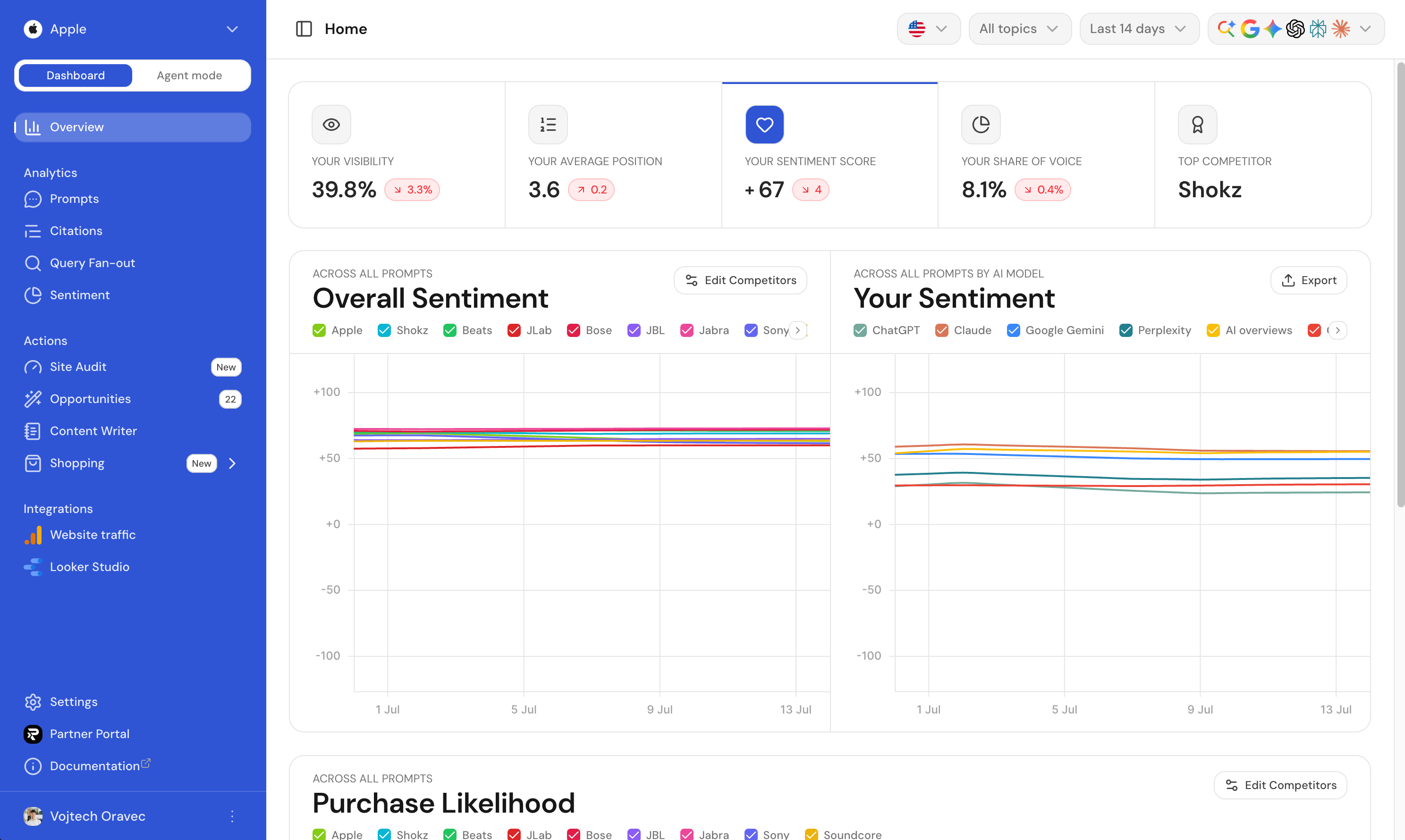
- Per prompt: Sentiment for each prompt over time
- Sentiment analysis: Deeper analysis by topic or aspect (e.g., pricing, features)
- By platform: Sentiment across different AI models

Improving sentiment
- Create content that highlights strengths and differentiators
- Address common objections in your content
- Ensure citations come from positive or neutral sources
- Use the AI assistant for sentiment improvement suggestions
FAQ
Can I have high visibility but a low sentiment score?
Yes. Visibility and sentiment score are independent metrics. Being mentioned often measures how frequently AI brings you up, not how favorably it talks about you when it does.
Does one negative mention ruin my overall sentiment score?
No. Sentiment score is a mean across all your mentions, so a single negative mention gets diluted by the neutral and positive ones around it. It's not decisive on its own, though a pattern of negative mentions will pull the average down over time.